

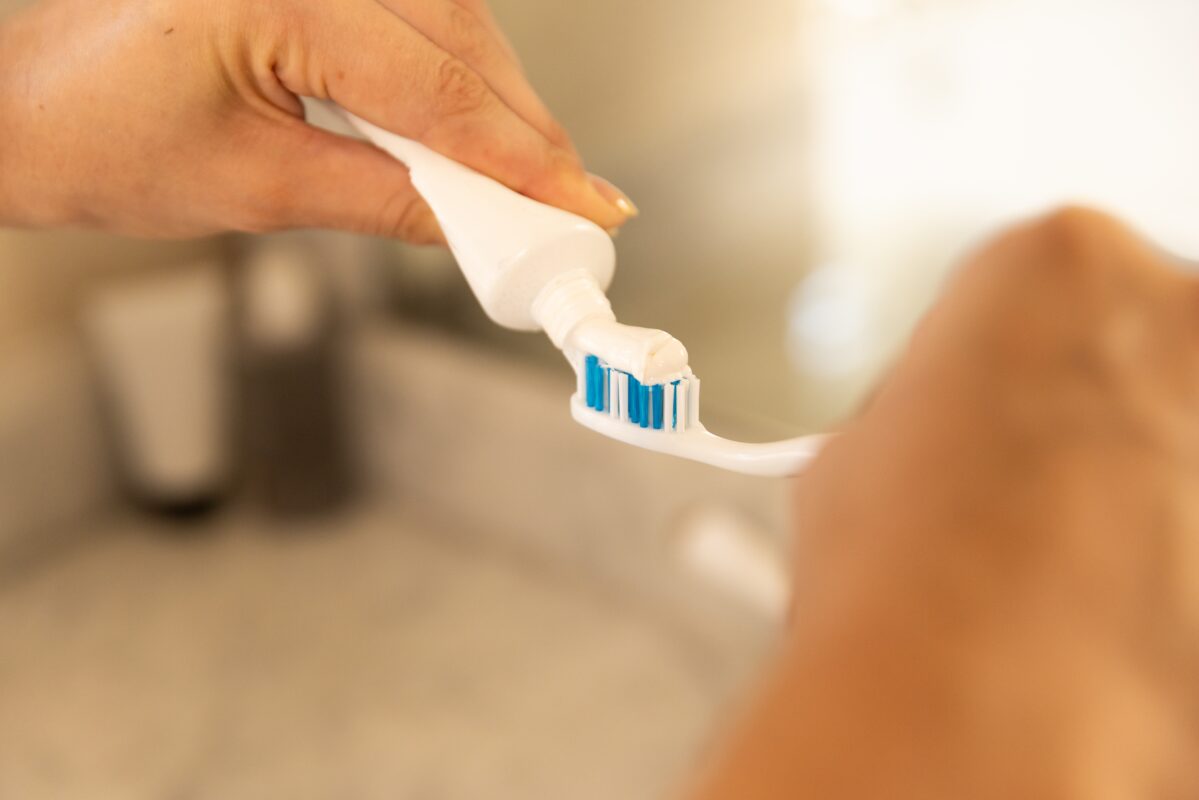
Two roads diverged in a wood, and I—I took the one less traveled by. And that has made all the difference. These are the final lines of Robert Frost’s “The Road Not Taken.” It is one of the most famous poems about making choices. In life, some decisions really do make all the difference. This is true even when it comes to something as small as toothpaste. While some active ingredients, like fluoride, are tried-and-true, others, like hydroxyapatite, are newer but promise to be just as effective. But what’s the difference between hydroxyapatite vs. fluoride toothpaste? Which road should you go down to make the best decision for your oral health?
Hydroxyapatite vs. Fluoride: How Toothpaste Prevents Cavities
 Before we get into what makes a toothpaste ingredient better than others, we need to understand the role of toothpaste in cavity prevention. The outer layer of your tooth, the enamel, is made of a hydroxyapatite structure. This is a calcium-phosphate mineral.
When your teeth are exposed to different acids from bacteria, foods, and drinks, the enamel can slowly erode over time. This process is called demineralization. As your teeth demineralize, they are more likely to form cavities. When cavities worsen, you may need a filling, crown, root canal, or even a tooth extraction.
A quality toothpaste can help prevent cavities so you can keep your natural teeth for longer. It works by preventing demineralization and reversing it when it occurs. But many different toothpastes exist, and hydroxyapatite has recently gained attention as a popular alternative to fluoride.
So when it comes to strengthening enamel and preventing cavities, many patients have asked us about hydroxyapatite vs. fluoride, looking for guidance that cuts through the marketing noise.
How Does Fluoride Prevent Cavities?
We’ve all heard about fluoride as the traditional active ingredient in toothpaste. But what does it actually do for your teeth? Fluoride is a naturally occurring mineral that is present in soil, water, and foods.
It protects your teeth from cavities by joining with the minerals in your enamel to make it stronger and more resistant to acid attacks. It also helps replace minerals that have been lost in the early stages of decay, which can stop or even reverse demineralization before a cavity fully develops.
Fluoride is by far the standard active ingredient in toothpaste and mouthwashes. Many municipalities even add small amounts of fluoride to the drinking water because of its well-documented cavity-fighting properties.
Hydroxyapatite: A Newer Alternative
Hydroxyapatite is the new kid on the block in toothpaste. But how does it work?
As an active ingredient, hydroxyapatite consists of the same material as the teeth’s enamel. In toothpaste, it is used in a lab‑made, very fine (often nano‑sized or micro‑sized) form that can help rebuild and protect the enamel surface by mimicking natural tooth structure. You may see it labeled “nano-hydroxyapatite” toothpaste, HA toothpaste, or n-HA toothpaste.
Because it is similar to the mineral already found in teeth and bone, some brands promote hydroxyapatite toothpaste as a more “natural” alternative to fluoride toothpaste.
People might reach for this type of toothpaste when they want a fluoride-free alternative.
Comparing Hydroxyapatite vs. Fluoride
If you’re considering hydroxyapatite vs. fluoride for yourself or your family, understanding a few key differences can help you make an informed choice.
Fluoride has decades of research and clinical data supporting its long-term use and is widely trusted for cavity prevention. Hydroxyapatite, on the other hand, is far newer and has fewer high-quality studies supporting it.
So far, research suggests that hydroxyapatite toothpaste can help protect enamel in a way that’s similar to fluoride by slowing demineralization and supporting remineralization. It also appears to reduce tooth sensitivity by helping to strengthen and rebuild the tooth surface.
Many of the studies demonstrating these benefits use relatively high concentrations of hydroxyapatite, often in very small particles, but the ideal formula and dose are still being studied.
It’s important to note that the American Dental Association (ADA) currently recognizes fluoride toothpastes and awards its Seal of Acceptance only to cavity‑protection toothpastes that contain fluoride. Hydroxyapatite toothpastes do not yet have an ADA Seal category, which is why they aren’t marketed with the Seal for cavity prevention.
Ultimately, the best choice for you depends on your priorities. If you’re looking for a well-established, ADA-approved option with decades of proven cavity protection, fluoride remains the gold standard. If you prefer a fluoride-free alternative, hydroxyapatite offers promising benefits.
As research continues, both ingredients may find their place in personalized dental care.
Schedule an Appointment for Preventive Care
When it comes to choosing a path for your oral health, the decision often starts at the toothpaste aisle. Both fluoride and hydroxyapatite toothpaste protect against tooth decay and help rebuild weakened enamel. However, fluoride remains the widely recommended standard, supported by decades of research and approval from the American Dental Association. While early studies suggest that hydroxyapatite may offer similar cavity-fighting benefits, it hasn’t yet earned ADA recognition. Each path has its merits, but only one is officially endorsed for cavity prevention.
You only have one set of permanent adult teeth. At Bent Tree Dental, our goal is to provide guidance and preventive care that helps you maintain your natural smile. Schedule a visit today to learn the best ways to prevent cavities and keep your smile looking and feeling great!