

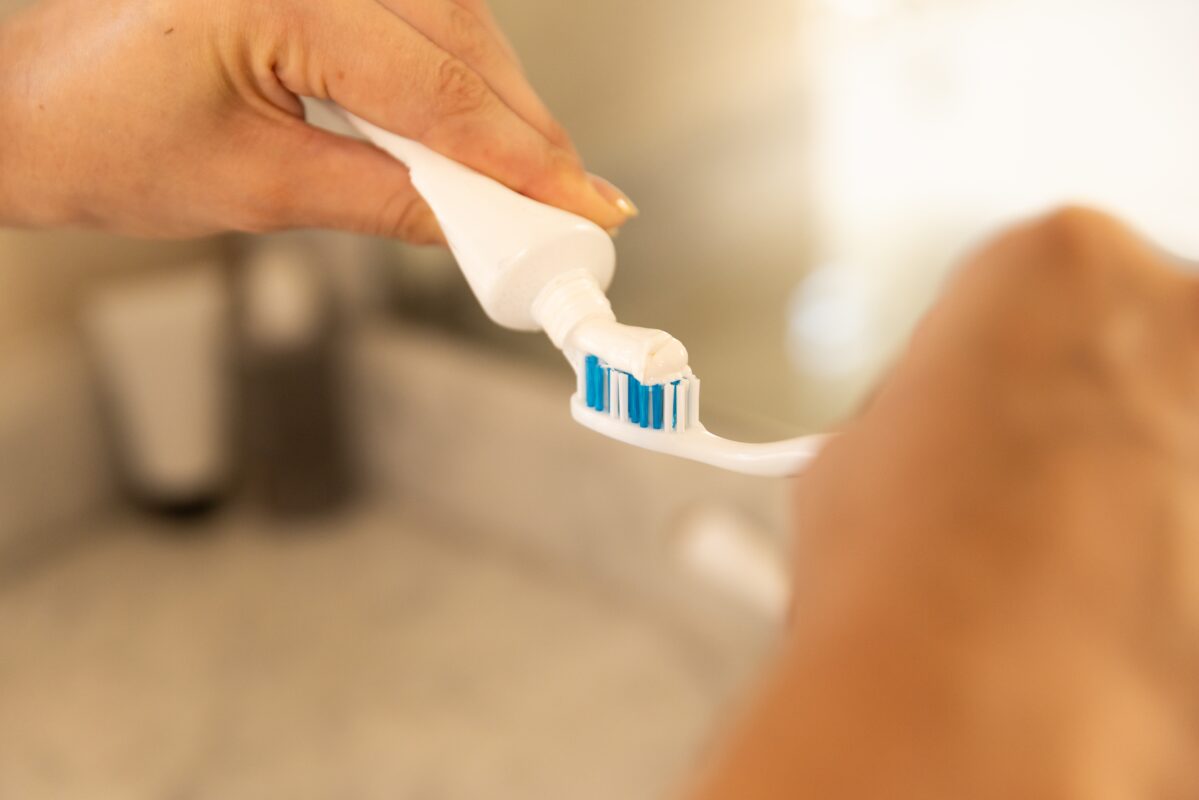
If you’re considering a fluoride-free toothpaste, you’ve probably seen a growing number of products promoted as effective alternatives. One new option that has gained attention is nano hydroxyapatite toothpaste. But how does it work, and is it a good choice for your health?
Your teeth are made of calcium phosphate, and nano hydroxyapatite is a lab-made version of that same material. Research has shown promising results, including support for remineralizing enamel, preventing cavities, and reducing sensitivity. At the same time, fluoride remains the most widely studied and recommended active ingredient in toothpaste, with decades of evidence supporting its safety and effectiveness. That’s why it’s often one of the primary ingredients we discuss with patients when talking about toothpaste options.
How Toothpaste Prevents Cavities
 Before we compare nano hydroxyapatite to fluoride toothpaste, we need to understand what toothpaste actually does.
Each day, your teeth are exposed to bacteria, food, and drinks. When bacteria combine with food particles, they form a sticky substance called plaque. Over time, plaque produces acids that can gradually wear down enamel in a process known as demineralization.
As the enamel loses minerals, teeth become more vulnerable to cavities. Once an actual hole forms, the damage is irreversible. At this point, you’ll need restorative treatment, such as a filling, crown, or root canal treatment, to preserve the healthy part of the tooth. Left untreated, you might ultimately need the tooth extracted.
A quality toothpaste helps prevent cavities and keeps your natural teeth healthier for longer. It prevents demineralization and reverses it through remineralization, restoring lost minerals to the enamel.
For decades, fluoride has been the traditional and trusted active ingredient for remineralizing enamel. More recently, nano hydroxyapatite toothpaste has been promoted as a “natural” alternative because it is made from the same mineral found in teeth.
Does Nano Hydroxyapatite Toothpaste Work?
Nano hydroxyapatite, often abbreviated as HA or n-HA, is appearing on more toothpaste labels. But how reliable is it as an active ingredient?
So far, research into nano hydroxyapatite has shown promising results. Toothpaste with n-HA consists of lab-made micro-sized hydroxyapatite. It remineralizes teeth by depositing minerals into tiny lesions in the enamel, reducing the risk of cavities. It also prevents tooth sensitivity and reduces bacterial growth on the surface.
Research demonstrates the benefits of using high concentrations of hydroxyapatite in very small particles, but the ideal formula and strength for the best results are still being studied.
So far, no human clinical studies have shown clear harm from nano hydroxyapatite in toothpaste. However, compared to fluoride, there aren’t as many long-term safety data on ingestion, especially in children.
Fluoride vs. Nano Hydroxyapatite Toothpaste
So where does that leave us? Nano hydroxyapatite appears to be a legitimate option. But is it better than fluoride?
For most patients, fluoride remains the traditional first choice. Here’s why:
Fluoride has been extensively studied for cavity prevention. Decades of research consistently show it can strengthen enamel and reduce decay risk, which is why it is often used in toothpaste formulations.
Another important point is that the American Dental Association (ADA) only awards its Seal of Acceptance for cavity protection to toothpastes that contain fluoride as an active ingredient. Nano hydroxyapatite toothpastes currently do not have this Seal of Acceptance.
This does not mean that nano hydroxyapatite is ineffective. It simply means that fluoride has the strongest support.
If you want the most established option for cavity prevention, fluoride toothpaste is still the best-supported choice. But if you’d rather avoid fluoride, nano hydroxyapatite toothpaste may be a reasonable alternative, especially compared to fluoride-free alternatives that lack an active ingredient.
Visit Bent Tree Dental for Dental Care Tailored to YOU
You may see nano hydroxyapatite marketed as an innovative ingredient for rebuilding enamel and preventing cavities. Research is encouraging so far, but fluoride remains the gold standard based on decades of consistent results.
At Bent Tree Dental, we want you to have accurate information so you can make the best decision for your oral health. When you come to us for your regular checkup, we’ll share straightforward tips to help you keep your teeth healthy and strong. Call our office and learn about our promotional new patient pricing. Book your visit today!